spring boot2
b站:【尚硅谷】SpringBoot2零基础入门教程(spring boot2干货满满) 语雀:语雀文档地址 源码地址: https://gitee.com/leifengyang/springboot2/tree/master
基础入门
01 Spring与SpringBoot
02 SpringBoot入门
HelloWorld
引入依赖
    <parent>
        <groupId>org.springframework.boot</groupId>
        <artifactId>spring-boot-starter-parent</artifactId>
        <version>2.3.4.RELEASE</version>
    </parent>

    <dependencies>
        <dependency>
            <groupId>org.springframework.boot</groupId>
            <artifactId>spring-boot-starter-web</artifactId>
        </dependency>

    </dependencies>
创建主程序
/**
 * 主程序类
 * @SpringBootApplication:这是一个SpringBoot应用
 */
@SpringBootApplication
public class MainApplication {

    public static void main(String[] args) {
        SpringApplication.run(MainApplication.class,args);
    }
}
编写业务
@RestController
public class HelloController {


    @RequestMapping("/hello")
    public String handle01(){
        return "Hello, Spring Boot 2!";
    }

}
测试 直接运行main方法
简化配置
简化部署
     <build>
        <plugins>
            <plugin>
                <groupId>org.springframework.boot</groupId>
                <artifactId>spring-boot-maven-plugin</artifactId>
            </plugin>
        </plugins>
    </build>
03 自动配置原理
1 SpringBoot特点
1.1 依赖管理
- 父项目做依赖管理
依赖管理
<parent>
    <groupId>org.springframework.boot</groupId>
    <artifactId>spring-boot-starter-parent</artifactId>
    <version>2.3.4.RELEASE</version>
</parent>

他的父项目
 <parent>
    <groupId>org.springframework.boot</groupId>
    <artifactId>spring-boot-dependencies</artifactId>
    <version>2.3.4.RELEASE</version>
  </parent>

几乎声明了所有开发中常用的依赖的版本号,自动版本仲裁机制
- 开发导入starter场景启动器
- 见到很多
spring-boot-starter-*:*就是某种场景 - 只要引入starter,这个场景的所有常规需要的依赖我们都自动引入
- SpringBoot所有支持的场景
- 见到的
*-spring-boot-starter: 第三方为我们提供的简化开发的场景启动器。 - 所有场景启动器最底层的依赖
- 见到很多
<dependency>
  <groupId>org.springframework.boot</groupId>
  <artifactId>spring-boot-starter</artifactId>
  <version>2.3.4.RELEASE</version>
  <scope>compile</scope>
</dependency>- 无需关注版本号,自动版本仲裁
- 引入依赖默认都可以不写版本
- 引入非版本仲裁的jar,要写版本号。
- 可以修改默认版本号
- 查看spring-boot-dependencies里面规定当前依赖的版本 用的 key。
- 在当前项目里面重写配置
    <properties>
        <mysql.version>5.1.43</mysql.version>
    </properties>
1.2 自动配置
- 自动配好Tomcat
- 引入Tomcat依赖。
- 配置Tomcat
    <dependency>
      <groupId>org.springframework.boot</groupId>
      <artifactId>spring-boot-starter-tomcat</artifactId>
      <version>2.3.4.RELEASE</version>
      <scope>compile</scope>
</dependency>-
自动配好SpringMVC
- 引入SpringMVC全套组件
- 自动配好SpringMVC常用组件(功能)
-
自动配好Web常见功能,如:字符编码问题
- SpringBoot帮我们配置好了所有web开发的常见场景
-
默认的包结构
- 主程序所在包及其下面的所有子包里面的组件都会被默认扫描进来
- 无需以前的包扫描配置
- 想要改变扫描路径,@SpringBootApplication(scanBasePackages=“com.atguigu”)
- 或者@ComponentScan 指定扫描路径
@SpringBootApplication
// 等同于
@SpringBootConfiguration
@EnableAutoConfiguration
@ComponentScan("com.atguigu.boot")- 各种配置拥有默认值
- 默认配置最终都是映射到某个类上,如:
MultipartPropertiesxxProperties - 配置文件的值最终会绑定某个类(
xxPropertites)上,这个类会在容器中创建对象
- 默认配置最终都是映射到某个类上,如:
- 按需加载所有自动配置项
- 非常多的starter
- 引入了哪些场景这个场景的自动配置才会开启
- SpringBoot所有的自动配置功能都在
spring-boot-autoconfigure包里面
2 容器功能
2.1 组件添加
@Configuration
- 配置类里面使用@Bean标注在方法上给容器注册组件,默认也是单实例的
- 配置类本身也是组件
- proxyBeanMethods:代理bean的方法
- Full(proxyBeanMethods = true) 【保证每个@Bean方法被调用多少次返回的组件都是单实例的】
- Lite(proxyBeanMethods = false)【每个@Bean方法被调用多少次返回的组件都是新创建的】
- 组件依赖必须使用Full模式默认。其他默认是否Lite模式
// Configuration使用示例
@Configuration(proxyBeanMethods = false) //告诉SpringBoot这是一个配置类 == 配置文件
public class MyConfig {
    /**
     * Full:外部无论对配置类中的这个组件注册方法调用多少次获取的都是之前注册容器中的单实例对象
     * @return
     */
    @Bean //给容器中添加组件。以方法名作为组件的id。返回类型就是组件类型。返回的值,就是组件在容器中的实例
    public User user01(){
        User zhangsan = new User("zhangsan", 18);
        //user组件依赖了Pet组件
        zhangsan.setPet(tomcatPet());
        return zhangsan;
    }
    @Bean("tom")
    public Pet tomcatPet(){
        return new Pet("tomcat");
    }
}
################################@Configuration测试代码如下########################################
@SpringBootConfiguration
@EnableAutoConfiguration
@ComponentScan("com.atguigu.boot")
public class MainApplication {

    public static void main(String[] args) {
        //1、返回我们IOC容器
        ConfigurableApplicationContext run = SpringApplication.run(MainApplication.class, args);
        //2、查看容器里面的组件
        String[] names = run.getBeanDefinitionNames();
        for (String name : names) {
            System.out.println(name);
        }
        //3、从容器中获取组件
        Pet tom01 = run.getBean("tom", Pet.class);
        Pet tom02 = run.getBean("tom", Pet.class);
        System.out.println("组件:"+(tom01 == tom02));
        //4、com.atguigu.boot.config.MyConfig$$EnhancerBySpringCGLIB$$51f1e1ca@1654a892
        MyConfig bean = run.getBean(MyConfig.class);
        System.out.println(bean);

        //如果@Configuration(proxyBeanMethods = true)代理对象调用方法。SpringBoot总会检查这个组件是否在容器中有。
        //保持组件单实例
        User user = bean.user01();
        User user1 = bean.user01();
        System.out.println(user == user1);
        User user01 = run.getBean("user01", User.class);
        Pet tom = run.getBean("tom", Pet.class);
        System.out.println("用户的宠物:"+(user01.getPet() == tom));
    }
}
@Bean、@Component、@Controller、@Service、@Repository
`@Bean("beanid")   // 自定义beanid`    默认单实例
// 给容器中添加组件。以方法名作为组件的id。返回类型就是组件类型。返回的值,就是组件在容器中的实例
public class User{
    int age;
    String sex;
}
@ComponentScan @Import
@Import({User.class, DBHelper.class})
//给容器中自动创建出这两个类型的组件、默认组件的名字就是全类名(调用无参数构造器
@Configuration(proxyBeanMethods = false) //告诉SpringBoot这是一个配置类 == 配置文件
public class MyConfig {
}
@Conditional
@Conditional 条件装配:满足Conditional指定的条件,则进行组件注入
- @ConditionalOnBean
- ConditionalOnMissingBean
- ConditionalOnClass
- ConditionalOnMissingClass
- ConditionalOnResource
- ConditionalOnWebApplication
- ConditionalOnNotWebApplication
- ConditionalOnJava
2.2 原生配置文件导入
@ImportResource("classpath:beans.xml")
======================beans.xml=========================
<?xml version="1.0" encoding="UTF-8"?>
<beans xmlns="http://www.springframework.org/schema/beans"
       xmlns:xsi="http://www.w3.org/2001/XMLSchema-instance"
       xmlns:context="http://www.springframework.org/schema/context"
       xsi:schemaLocation="http://www.springframework.org/schema/beans http://www.springframework.org/schema/beans/spring-beans.xsd http://www.springframework.org/schema/context https://www.springframework.org/schema/context/spring-context.xsd">

    <bean id="haha" class="com.atguigu.boot.bean.User">
        <property name="name" value="zhangsan"></property>
        <property name="age" value="18"></property>
    </bean>

    <bean id="hehe" class="com.atguigu.boot.bean.Pet">
        <property name="name" value="tomcat"></property>
    </bean>
</beans> @ImportResource("classpath:beans.xml")
public class MyConfig {}
======================测试=================
        boolean haha = run.containsBean("haha");
        boolean hehe = run.containsBean("hehe");
        System.out.println("haha:"+haha);//true
        System.out.println("hehe:"+hehe);//true
2.3配置绑定
如何使用Java读取到properties文件中的内容,并且把它封装到JavaBean中,以供随时使用;
-
@ConfigurationProperties必须是容器中的组件才有这个功能/** * 只有在容器中的组件,才会拥有SpringBoot提供的强大功能 */ @Data @Component @ConfigurationProperties(prefix="mycar") public class Car{ private String brand; private Integer price; } -
@EnableConfigurationProperties + @ConfigurationProperties@ConfigurationProperties(prefix = "mycar") public class Car { private String brand; private Integer price; }@Configuration @EnableConfigurationProperties(Car.class) public class MyConfig{ } -
@Component + @ConfigurationProperties@EnableConfigurationProperties(Car.class) //1、开启Car配置绑定功能 //2、把这个Car这个组件自动注册到容器中 public class MyConfig { }
3 自动配置原理入门
3.1、引导加载自动配置类
@SpringBootConfiguration
@EnableAutoConfiguration
@ComponentScan(excludeFilters = { @Filter(type = FilterType.CUSTOM, classes = TypeExcludeFilter.class),
        @Filter(type = FilterType.CUSTOM, classes = AutoConfigurationExcludeFilter.class) })
public @interface SpringBootApplication{}


======================
1、@SpringBootConfiguration
@Configuration。代表当前是一个配置类
2、@ComponentScan 包扫描
- 指定扫描哪些,Spring注解;
3、@EnableAutoConfiguration
@AutoConfigurationPackage
@Import(AutoConfigurationImportSelector.class)
public @interface EnableAutoConfiguration {}-
@AutoConfigurationPackage// 自动配置包?指定了默认的包规则 @Import(AutoConfigurationPackages.Registrar.class) //给容器中导入一个组件 public @interface AutoConfigurationPackage {} //利用Registrar给容器中导入一系列组件 //将指定的一个包下的所有组件导入进来?MainApplication 所在包下。 -
@Import(AutoConfigurationImportSelector.class)- 利用getAutoConfigurationEntry(annotationMetadata);给容器中批量导入一些组件
- 调用
List<String> configurations = getCandidateConfigurations(annotationMetadata, attributes)获取到所有需要导入到容器中的配置类 - 利用工厂加载
Map<String, List<String>> loadSpringFactories(@Nullable ClassLoader classLoader);得到所有的组件 - 从
META-INF/spring.factories位置来加载一个文件。 默认扫描我们当前系统里面所有META-INF/spring.factories位置的文件spring-boot-autoconfigure-2.3.4.RELEASE.jar包里面也有META-INF/spring.factories
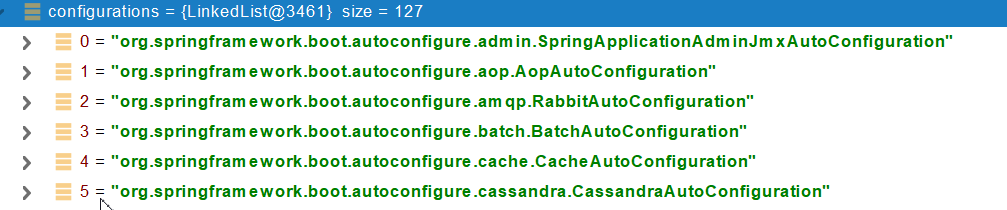
文件里面写死了spring-boot一启动就要给容器中加载的所有配置类
spring-boot-autoconfigure-2.3.4.RELEASE.jar/META-INF/spring.factories
# Auto Configure
org.springframework.boot.autoconfigure.EnableAutoConfiguration=\
org.springframework.boot.autoconfigure.admin.SpringApplicationAdminJmxAutoConfiguration,\
org.springframework.boot.autoconfigure.aop.AopAutoConfiguration,\
org.springframework.boot.autoconfigure.amqp.RabbitAutoConfiguration,\
org.springframework.boot.autoconfigure.batch.BatchAutoConfiguration,\
org.springframework.boot.autoconfigure.cache.CacheAutoConfiguration,\
org.springframework.boot.autoconfigure.cassandra.CassandraAutoConfiguration,\
org.springframework.boot.autoconfigure.context.ConfigurationPropertiesAutoConfiguration,\
org.springframework.boot.autoconfigure.context.LifecycleAutoConfiguration,\
org.springframework.boot.autoconfigure.context.MessageSourceAutoConfiguration,\
org.springframework.boot.autoconfigure.context.PropertyPlaceholderAutoConfiguration,\
org.springframework.boot.autoconfigure.couchbase.CouchbaseAutoConfiguration,\
org.springframework.boot.autoconfigure.dao.PersistenceExceptionTranslationAutoConfiguration,\
org.springframework.boot.autoconfigure.data.cassandra.CassandraDataAutoConfiguration,\
org.springframework.boot.autoconfigure.data.cassandra.CassandraReactiveDataAutoConfiguration,\
org.springframework.boot.autoconfigure.data.cassandra.CassandraReactiveRepositoriesAutoConfiguration,\
org.springframework.boot.autoconfigure.data.cassandra.CassandraRepositoriesAutoConfiguration,\
org.springframework.boot.autoconfigure.data.couchbase.CouchbaseDataAutoConfiguration,\
org.springframework.boot.autoconfigure.data.couchbase.CouchbaseReactiveDataAutoConfiguration,\
org.springframework.boot.autoconfigure.data.couchbase.CouchbaseReactiveRepositoriesAutoConfiguration,\
org.springframework.boot.autoconfigure.data.couchbase.CouchbaseRepositoriesAutoConfiguration,\
org.springframework.boot.autoconfigure.data.elasticsearch.ElasticsearchDataAutoConfiguration,\
org.springframework.boot.autoconfigure.data.elasticsearch.ElasticsearchRepositoriesAutoConfiguration,\
org.springframework.boot.autoconfigure.data.elasticsearch.ReactiveElasticsearchRepositoriesAutoConfiguration,\
org.springframework.boot.autoconfigure.data.elasticsearch.ReactiveElasticsearchRestClientAutoConfiguration,\
org.springframework.boot.autoconfigure.data.jdbc.JdbcRepositoriesAutoConfiguration,\
org.springframework.boot.autoconfigure.data.jpa.JpaRepositoriesAutoConfiguration,\
org.springframework.boot.autoconfigure.data.ldap.LdapRepositoriesAutoConfiguration,\
org.springframework.boot.autoconfigure.data.mongo.MongoDataAutoConfiguration,\
org.springframework.boot.autoconfigure.data.mongo.MongoReactiveDataAutoConfiguration,\
org.springframework.boot.autoconfigure.data.mongo.MongoReactiveRepositoriesAutoConfiguration,\
org.springframework.boot.autoconfigure.data.mongo.MongoRepositoriesAutoConfiguration,\
org.springframework.boot.autoconfigure.data.neo4j.Neo4jDataAutoConfiguration,\
org.springframework.boot.autoconfigure.data.neo4j.Neo4jRepositoriesAutoConfiguration,\
org.springframework.boot.autoconfigure.data.solr.SolrRepositoriesAutoConfiguration,\
org.springframework.boot.autoconfigure.data.r2dbc.R2dbcDataAutoConfiguration,\
org.springframework.boot.autoconfigure.data.r2dbc.R2dbcRepositoriesAutoConfiguration,\
org.springframework.boot.autoconfigure.data.r2dbc.R2dbcTransactionManagerAutoConfiguration,\
org.springframework.boot.autoconfigure.data.redis.RedisAutoConfiguration,\
org.springframework.boot.autoconfigure.data.redis.RedisReactiveAutoConfiguration,\
org.springframework.boot.autoconfigure.data.redis.RedisRepositoriesAutoConfiguration,\
org.springframework.boot.autoconfigure.data.rest.RepositoryRestMvcAutoConfiguration,\
org.springframework.boot.autoconfigure.data.web.SpringDataWebAutoConfiguration,\
org.springframework.boot.autoconfigure.elasticsearch.ElasticsearchRestClientAutoConfiguration,\
org.springframework.boot.autoconfigure.flyway.FlywayAutoConfiguration,\
org.springframework.boot.autoconfigure.freemarker.FreeMarkerAutoConfiguration,\
org.springframework.boot.autoconfigure.groovy.template.GroovyTemplateAutoConfiguration,\
org.springframework.boot.autoconfigure.gson.GsonAutoConfiguration,\
org.springframework.boot.autoconfigure.h2.H2ConsoleAutoConfiguration,\
org.springframework.boot.autoconfigure.hateoas.HypermediaAutoConfiguration,\
org.springframework.boot.autoconfigure.hazelcast.HazelcastAutoConfiguration,\
org.springframework.boot.autoconfigure.hazelcast.HazelcastJpaDependencyAutoConfiguration,\
org.springframework.boot.autoconfigure.http.HttpMessageConvertersAutoConfiguration,\
org.springframework.boot.autoconfigure.http.codec.CodecsAutoConfiguration,\
org.springframework.boot.autoconfigure.influx.InfluxDbAutoConfiguration,\
org.springframework.boot.autoconfigure.info.ProjectInfoAutoConfiguration,\
org.springframework.boot.autoconfigure.integration.IntegrationAutoConfiguration,\
org.springframework.boot.autoconfigure.jackson.JacksonAutoConfiguration,\
org.springframework.boot.autoconfigure.jdbc.DataSourceAutoConfiguration,\
org.springframework.boot.autoconfigure.jdbc.JdbcTemplateAutoConfiguration,\
org.springframework.boot.autoconfigure.jdbc.JndiDataSourceAutoConfiguration,\
org.springframework.boot.autoconfigure.jdbc.XADataSourceAutoConfiguration,\
org.springframework.boot.autoconfigure.jdbc.DataSourceTransactionManagerAutoConfiguration,\
org.springframework.boot.autoconfigure.jms.JmsAutoConfiguration,\
org.springframework.boot.autoconfigure.jmx.JmxAutoConfiguration,\
org.springframework.boot.autoconfigure.jms.JndiConnectionFactoryAutoConfiguration,\
org.springframework.boot.autoconfigure.jms.activemq.ActiveMQAutoConfiguration,\
org.springframework.boot.autoconfigure.jms.artemis.ArtemisAutoConfiguration,\
org.springframework.boot.autoconfigure.jersey.JerseyAutoConfiguration,\
org.springframework.boot.autoconfigure.jooq.JooqAutoConfiguration,\
org.springframework.boot.autoconfigure.jsonb.JsonbAutoConfiguration,\
org.springframework.boot.autoconfigure.kafka.KafkaAutoConfiguration,\
org.springframework.boot.autoconfigure.availability.ApplicationAvailabilityAutoConfiguration,\
org.springframework.boot.autoconfigure.ldap.embedded.EmbeddedLdapAutoConfiguration,\
org.springframework.boot.autoconfigure.ldap.LdapAutoConfiguration,\
org.springframework.boot.autoconfigure.liquibase.LiquibaseAutoConfiguration,\
org.springframework.boot.autoconfigure.mail.MailSenderAutoConfiguration,\
org.springframework.boot.autoconfigure.mail.MailSenderValidatorAutoConfiguration,\
org.springframework.boot.autoconfigure.mongo.embedded.EmbeddedMongoAutoConfiguration,\
org.springframework.boot.autoconfigure.mongo.MongoAutoConfiguration,\
org.springframework.boot.autoconfigure.mongo.MongoReactiveAutoConfiguration,\
org.springframework.boot.autoconfigure.mustache.MustacheAutoConfiguration,\
org.springframework.boot.autoconfigure.orm.jpa.HibernateJpaAutoConfiguration,\
org.springframework.boot.autoconfigure.quartz.QuartzAutoConfiguration,\
org.springframework.boot.autoconfigure.r2dbc.R2dbcAutoConfiguration,\
org.springframework.boot.autoconfigure.rsocket.RSocketMessagingAutoConfiguration,\
org.springframework.boot.autoconfigure.rsocket.RSocketRequesterAutoConfiguration,\
org.springframework.boot.autoconfigure.rsocket.RSocketServerAutoConfiguration,\
org.springframework.boot.autoconfigure.rsocket.RSocketStrategiesAutoConfiguration,\
org.springframework.boot.autoconfigure.security.servlet.SecurityAutoConfiguration,\
org.springframework.boot.autoconfigure.security.servlet.UserDetailsServiceAutoConfiguration,\
org.springframework.boot.autoconfigure.security.servlet.SecurityFilterAutoConfiguration,\
org.springframework.boot.autoconfigure.security.reactive.ReactiveSecurityAutoConfiguration,\
org.springframework.boot.autoconfigure.security.reactive.ReactiveUserDetailsServiceAutoConfiguration,\
org.springframework.boot.autoconfigure.security.rsocket.RSocketSecurityAutoConfiguration,\
org.springframework.boot.autoconfigure.security.saml2.Saml2RelyingPartyAutoConfiguration,\
org.springframework.boot.autoconfigure.sendgrid.SendGridAutoConfiguration,\
org.springframework.boot.autoconfigure.session.SessionAutoConfiguration,\
org.springframework.boot.autoconfigure.security.oauth2.client.servlet.OAuth2ClientAutoConfiguration,\
org.springframework.boot.autoconfigure.security.oauth2.client.reactive.ReactiveOAuth2ClientAutoConfiguration,\
org.springframework.boot.autoconfigure.security.oauth2.resource.servlet.OAuth2ResourceServerAutoConfiguration,\
org.springframework.boot.autoconfigure.security.oauth2.resource.reactive.ReactiveOAuth2ResourceServerAutoConfiguration,\
org.springframework.boot.autoconfigure.solr.SolrAutoConfiguration,\
org.springframework.boot.autoconfigure.task.TaskExecutionAutoConfiguration,\
org.springframework.boot.autoconfigure.task.TaskSchedulingAutoConfiguration,\
org.springframework.boot.autoconfigure.thymeleaf.ThymeleafAutoConfiguration,\
org.springframework.boot.autoconfigure.transaction.TransactionAutoConfiguration,\
org.springframework.boot.autoconfigure.transaction.jta.JtaAutoConfiguration,\
org.springframework.boot.autoconfigure.validation.ValidationAutoConfiguration,\
org.springframework.boot.autoconfigure.web.client.RestTemplateAutoConfiguration,\
org.springframework.boot.autoconfigure.web.embedded.EmbeddedWebServerFactoryCustomizerAutoConfiguration,\
org.springframework.boot.autoconfigure.web.reactive.HttpHandlerAutoConfiguration,\
org.springframework.boot.autoconfigure.web.reactive.ReactiveWebServerFactoryAutoConfiguration,\
org.springframework.boot.autoconfigure.web.reactive.WebFluxAutoConfiguration,\
org.springframework.boot.autoconfigure.web.reactive.error.ErrorWebFluxAutoConfiguration,\
org.springframework.boot.autoconfigure.web.reactive.function.client.ClientHttpConnectorAutoConfiguration,\
org.springframework.boot.autoconfigure.web.reactive.function.client.WebClientAutoConfiguration,\
org.springframework.boot.autoconfigure.web.servlet.DispatcherServletAutoConfiguration,\
org.springframework.boot.autoconfigure.web.servlet.ServletWebServerFactoryAutoConfiguration,\
org.springframework.boot.autoconfigure.web.servlet.error.ErrorMvcAutoConfiguration,\
org.springframework.boot.autoconfigure.web.servlet.HttpEncodingAutoConfiguration,\
org.springframework.boot.autoconfigure.web.servlet.MultipartAutoConfiguration,\
org.springframework.boot.autoconfigure.web.servlet.WebMvcAutoConfiguration,\
org.springframework.boot.autoconfigure.websocket.reactive.WebSocketReactiveAutoConfiguration,\
org.springframework.boot.autoconfigure.websocket.servlet.WebSocketServletAutoConfiguration,\
org.springframework.boot.autoconfigure.websocket.servlet.WebSocketMessagingAutoConfiguration,\
org.springframework.boot.autoconfigure.webservices.WebServicesAutoConfiguration,\
org.springframework.boot.autoconfigure.webservices.client.WebServiceTemplateAutoConfiguration
3.2、按需开启自动配置项
虽然我们127个场景的所有自动配置启动的时候默认全部加载。 xxxxAutoConfiguration 按照条件装配规则(@Conditional),最终会按需配置。
3.3、修改默认配置
    @Bean
    @ConditionalOnBean(MultipartResolver.class)  //容器中有这个类型组件
    @ConditionalOnMissingBean(name = DispatcherServlet.MULTIPART_RESOLVER_BEAN_NAME) //容器中没有这个名字 multipartResolver 的组件
    public MultipartResolver multipartResolver(MultipartResolver resolver) {
        //给@Bean标注的方法传入了对象参数,这个参数的值就会从容器中找。
        //SpringMVC multipartResolver。防止有些用户配置的文件上传解析器不符合规范
        // Detect if the user has created a MultipartResolver but named it incorrectly
        return resolver;
    }
给容器中加入了文件上传解析器;
SpringBoot默认会在底层配好所有的组件。但是如果用户自己配置了以用户的优先
@Bean
    @ConditionalOnMissingBean
    public CharacterEncodingFilter characterEncodingFilter() {
    }
总结:
- SpringBoot先加载所有的自动配置类
xxxxxAutoConfiguration - 每个自动配置类按照条件进行生效,默认都会绑定配置文件指定的值。xxxxProperties里面拿。xxxProperties和配置文件进行了绑定
- 生效的配置类就会给容器中装配很多组件
- 只要容器中有这些组件,相当于这些功能就有了
- 定制化配置
- 用户直接自己@Bean替换底层的组件
- 用户去看这个组件是获取的配置文件什么值就去修改。
xxxxxAutoConfiguration -⇒ 组件 -⇒ xxxxProperties里面拿值 —⇒ application.properties
3.4 最佳实践
- 引入场景依赖
- 查看自动配置了哪些(选做)
- 自己分析,引入场景对应的自动配置一般都生效了
- 配置文件中
debug=true开启自动配置报告。Negative(不生效)\Positive(生效)
- 是否需要修改
- 参照文档修改`配置项
- https://docs.spring.io/spring-boot/docs/current/reference/html/appendix-application-properties.html#common-application-properties
- 自己分析。`xxxxProperties绑定了配置文件的哪些。
- 自定义加入或者替换组件
@Bean@Component。。。
- 自定义器 XXXXXCustomizer;
04 开发小技巧
-
Lombok
<dependency> <groupId>org.projectlombok</groupId> <artifactId>lombok</artifactId> </dependency> <!-- dea中搜索安装lombok插件 -->===============================简化JavaBean开发=================================== @NoArgsConstructor //@AllArgsConstructor @Data @ToString @EqualsAndHashCode public class User { private String name; private Integer age; private Pet pet; public User(String name,Integer age){ this.name = name; this.age = age; } } ================================简化日志开发=================================== @Slf4j @RestController public class HelloController { @RequestMapping("/hello") public String handle01(@RequestParam("name") String name){ log.info("请求进来了...."); return "Hello, Spring Boot 2!"+"你好:"+name; } } -
dev-tools
<dependency> <groupId>org.springframework.boot</groupId> <artifactId>spring-boot-devtools</artifactId> <optional>true</optional> </dependency> -
Spring Initailizr(项目初始化向导)
核心功能
04 配置文件
1 文件类型
- application.properties
- application.yaml yaml的写法 字面量 对象 数组
@Data
public class Person {

    private String userName;
    private Boolean boss;
    private Date birth;
    private Integer age;
    private Pet pet;
    private String[] interests;
    private List<String> animal;
    private Map<String, Object> score;
    private Set<Double> salarys;
    private Map<String, List<Pet>> allPets;
}

@Data
public class Pet {
    private String name;
    private Double weight;
}person:
userName: zhangsan
boss: false
birth: 2019/12/12 20:12:33
age: 18
pet:
name: tomcat
weight: 23.4
interests: [篮球,游泳]
animal:
- jerry
- mario
score:
english:
first: 30
second: 40
third: 50
math: [131,140,148]
chinese: {first: 128,second: 136}
salarys: [3999,4999.98,5999.99]
allPets:
sick:
- {name: tom}
- {name: jerry,weight: 47}
health: [{name: mario,weight: 47}]2 配置提示
自定义的类和配置文件绑定一般没有提示。
        <dependency>
            <groupId>org.springframework.boot</groupId>
            <artifactId>spring-boot-configuration-processor</artifactId>
            <optional>true</optional>
        </dependency>


 <build>
        <plugins>
            <plugin>
                <groupId>org.springframework.boot</groupId>
                <artifactId>spring-boot-maven-plugin</artifactId>
                <configuration>
                    <excludes>
                        <exclude>
                            <groupId>org.springframework.boot</groupId>
                            <artifactId>spring-boot-configuration-processor</artifactId>
                        </exclude>
                    </excludes>
                </configuration>
            </plugin>
        </plugins>
    </build>
05 web开发
1 springMVC 自动配置概览
静态资源目录
只要静态资源放在类路径下: called /static or /public or /resources or /META-INF/resources
访问 : 当前项目根路径/ + 静态资源名
原理: 静态映射/**。
请求进来,先去找Controller看能不能处理。不能处理的所有请求又都交给静态资源处理器。静态资源也找不到则响应404页面
欢迎页支持
自定义 Favicon
2 简单功能分析
3 请求参数处理
0 请求映射
@RequestMapping
@GetMapping
@PostMapping
@PutMapping
@DeleteMapping
idea 快捷键 ctrl + h 显示继承树 ctrl + f12 当前文件结构
1 普通参数与基本注解
@PathVariable @RequestHeader @RequestParam @CookieValue
@RequestBody 针对post请求
@ResponseBody @RequestAttribute @MatrixVarable
POJO封装过程
参数处理原理
HandlerMapping中找到能处理请求的Handler``(Controller.method())- 为当前Handler 找一个适配器
HandlerAdapter;RequestMappingHandlerAdapter - 适配器执行目标方法并确定方法参数的每一个值
handleAdapter- 执行目标方法
- 参数解析器-
HandlerMethodArgumentResolver - 返回值处理器
- 如何确定目标方法每一个参数的值
4 数据响应与内容协商
5 视图解析与模版引擎
6 拦截器
1 HandlerInterceptor 接口
/**
 * 登录检查
 * 1、配置好拦截器要拦截哪些请求
 * 2、把这些配置放在容器中
 */
@Slf4j
public class LoginInterceptor implements HandlerInterceptor {

    /**
     * 目标方法执行之前
     * @param request
     * @param response
     * @param handler
     * @return
     * @throws Exception
     */
    @Override
    public boolean preHandle(HttpServletRequest request, HttpServletResponse response, Object handler) throws Exception {

        String requestURI = request.getRequestURI();
        log.info("preHandle拦截的请求路径是{}",requestURI);

        //登录检查逻辑
        HttpSession session = request.getSession();

        Object loginUser = session.getAttribute("loginUser");

        if(loginUser != null){
            //放行
            return true;
        }

        //拦截住。未登录。跳转到登录页
        request.setAttribute("msg","请先登录");
//        re.sendRedirect("/");
        request.getRequestDispatcher("/").forward(request,response);
        return false;
    }

    /**
     * 目标方法执行完成以后
     * @param request
     * @param response
     * @param handler
     * @param modelAndView
     * @throws Exception
     */
    @Override
    public void postHandle(HttpServletRequest request, HttpServletResponse response, Object handler, ModelAndView modelAndView) throws Exception {
        log.info("postHandle执行{}",modelAndView);
    }

    /**
     * 页面渲染以后
     * @param request
     * @param response
     * @param handler
     * @param ex
     * @throws Exception
     */
    @Override
    public void afterCompletion(HttpServletRequest request, HttpServletResponse response, Object handler, Exception ex) throws Exception {
        log.info("afterCompletion执行异常{}",ex);
    }
}
2 配置拦截器
/**
 * 1、编写一个拦截器实现HandlerInterceptor接口
 * 2、拦截器注册到容器中(实现WebMvcConfigurer的addInterceptors)
 * 3、指定拦截规则【如果是拦截所有,静态资源也会被拦截】
 */
@Configuration
public class AdminWebConfig implements WebMvcConfigurer {

    @Override
    public void addInterceptors(InterceptorRegistry registry) {
        registry.addInterceptor(new LoginInterceptor())
                .addPathPatterns("/**")  //所有请求都被拦截包括静态资源
                .excludePathPatterns("/","/login","/css/**","/fonts/**","/images/**","/js/**"); //放行的请求
    }
}
3 拦截器原理
-
根据当前请求,找到HandlerExecutionChain,它包含可以处理请求的
handler以及该handler的所有拦截器。 -
按顺序执行所有拦截器的
preHandle方法:- 如果当前拦截器的
preHandle方法返回true,则继续执行下一个拦截器的preHandle方法。 - 如果当前拦截器的
preHandle方法返回false,则:- 停止执行后续拦截器的
preHandle方法。 - 倒序执行所有已经执行过的拦截器的
afterCompletion方法。 - 不执行目标方法。
- 停止执行后续拦截器的
- 如果当前拦截器的
-
如果所有拦截器的
preHandle方法都返回true,则执行目标方法。 -
在目标方法执行完成后,按倒序执行所有拦截器的
postHandle方法。 -
如果在执行目标方法或拦截器的任何步骤中发生异常,则会直接倒序触发所有拦截器的
afterCompletion方法。 -
页面渲染完成后,无论是否发生异常,都会倒序触发所有拦截器的
afterCompletion方法。
补充说明:
preHandle:在目标方法执行之前调用,用于拦截和预处理请求。postHandle:在目标方法执行完成后调用,但在视图渲染之前调用,用于对模型数据进行修改或其他处理。afterCompletion:在视图渲染完成后调用,用于资源清理或记录日志等操作。- 拦截器的执行顺序由其注册顺序决定,先注册的拦截器先执行
preHandle,后执行postHandle和afterCompletion。